Back Beach: Paritūtū and the islands offshore
Compiled by Surf Haunts · Updated 2026-09-21
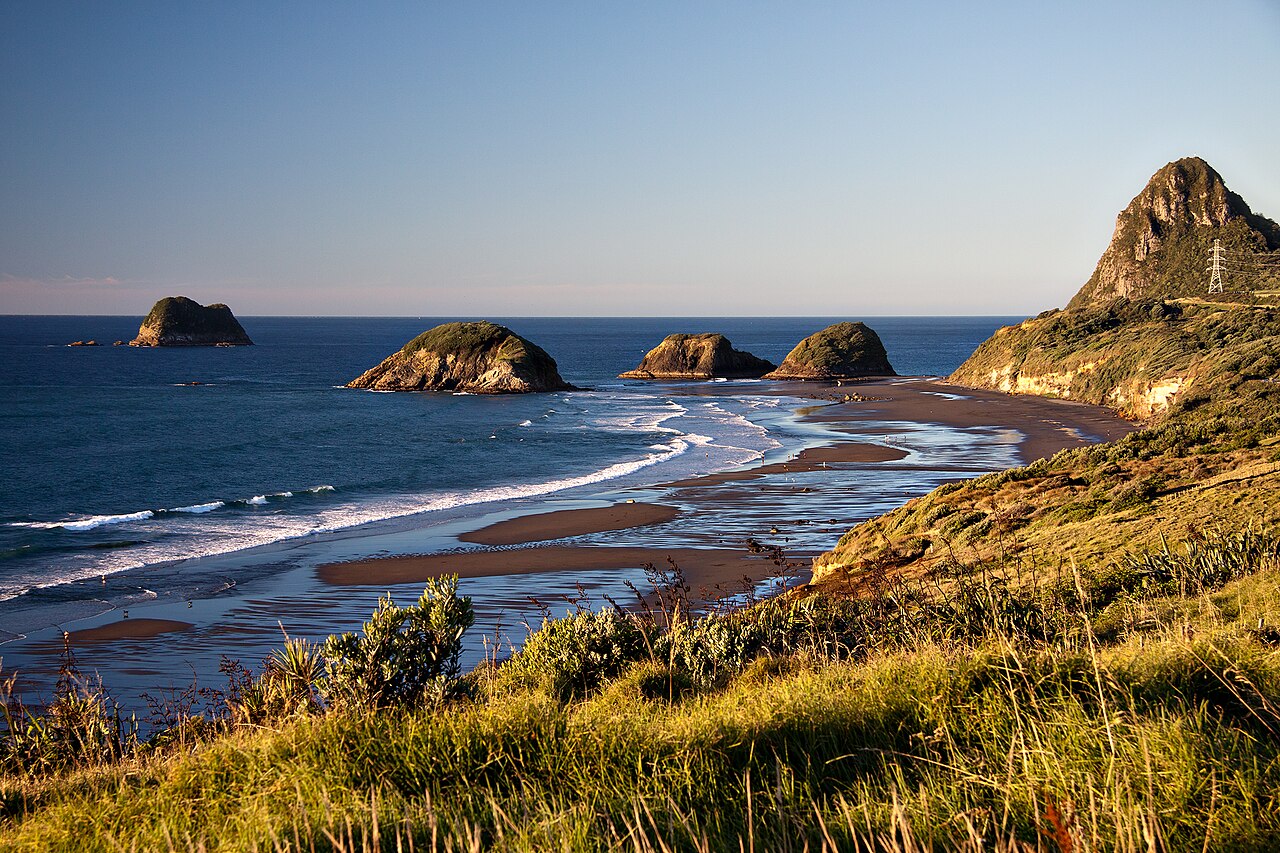
At Back Beach in New Plymouth, the tall rock at one end of the sand is Paritūtū. Offshore are the lower forms of Ngā Motu, also called the Sugar Loaf Islands. The photograph on this page puts them in the same view, which helps explain why the coast looks so distinctive.
An older volcanic landscape
The Department of Conservation describes the offshore islands and sea stacks as remnants of a volcano much older than Taranaki Maunga. Softer material has worn away, leaving the separate rock forms seen from the coast.
New Plymouth's council also identifies Paritūtū and the islands as significant volcanic landforms. The tall rock and the scattered offshore shapes are parts of that larger geological setting.
The land above the sand
Back Beach also sits beside Paritūtū Centennial Park. The council's 2006 coastal reserves plan records the reserve's extent and history, including a large coastal parcel between Paritūtū and Back Beach becoming a recreation reserve in 1969.
Reading the photograph
Dave Young's photograph was taken in January 2011. Paritūtū rises on the right; the smaller island forms sit farther across the water. Vegetation fills the near slope and the dark beach curves below it.
It's a dated view of the shoreline. The visible sand, water and light belong to that photograph, rather than showing how the beach looks all the time.
Help us add the local detail
An older beach photograph or a dated recollection of surfing here would be a useful addition. Email us with a detail or correction. We'll check what we can, ask before publishing it and agree how to credit you.
Our Back Beach print
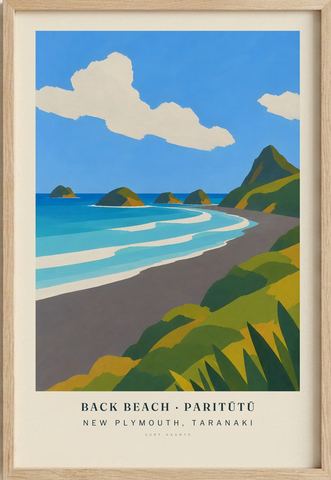
Our Back Beach · Paritūtū print follows the same broad relationship between beach, Paritūtū and offshore rocks. It leaves out buildings and people, using the dark sand and green slopes to frame the water. The illustration and documentary photograph are shown separately.
Compiled from public historical sources and fact-checked against them at the time of writing – not a first-hand or local account. Corrections and memories are welcome; we verify before publishing anything sent in.