Snapper Rocks: the sand behind the surf
Compiled by Surf Haunts · Updated 2026-09-21
Snapper Rocks sits at the southern end of the Gold Coast, beside Rainbow Bay. The rocks are easy to pick out in photographs. The sand is harder to follow, but it explains a lot about how this stretch of coast has changed.
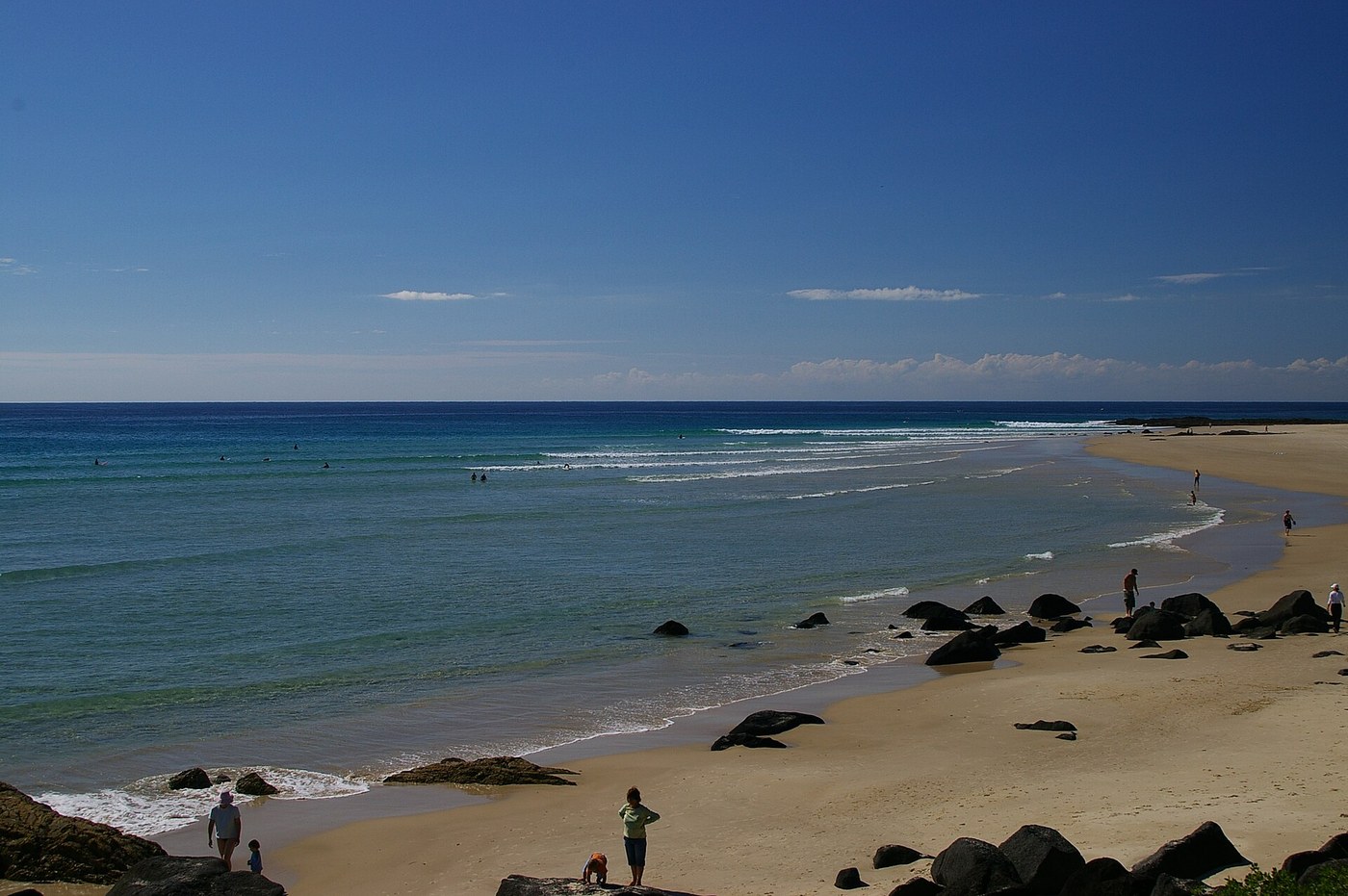
A river entrance interrupted the sand
Sand naturally moves north along this coast. Walls built at the Tweed River entrance interrupted that movement, leaving beaches farther north short of sand.
The bypass project's explanation of the river walls and beach erosion describes the problem that followed. Protecting the river entrance had consequences well beyond the walls themselves.
The pipes beneath the coast
Sand bypass pumping began in 2001. A jetty south of the river intercepts drifting sand, which is mixed with water and carried through underground pipes to the coast north of the entrance. Waves and currents then move it along the beaches.
The project's illustrated guide to the sand bypass system shows the route. In the early years, extra sand was moved to help rebuild beaches that had lost it over previous decades.
So some of the work behind the beach happens out of sight. What looks like an entirely natural arrangement of sand has also been shaped by a long-running engineering project.
Where the Superbank fits in
That early supply of sand helped form a long bank extending from Snapper Rocks towards Kirra. Waves and currents shaped the deposited sand into the formation that became known as the Superbank.
The project's account also describes how the bank changed as the initial surplus moved on. The name doesn't mean there's one permanent, unchanging wave joining all those places together. Sand keeps moving, and photographs taken years apart can show quite different beaches.
What do you remember?
Do you have an older photo of Rainbow Bay or Snapper, especially one showing where the sand used to be? Email us with a memory, correction or source. We'll ask before publishing it and agree how to credit you.
Our Snapper Rocks print
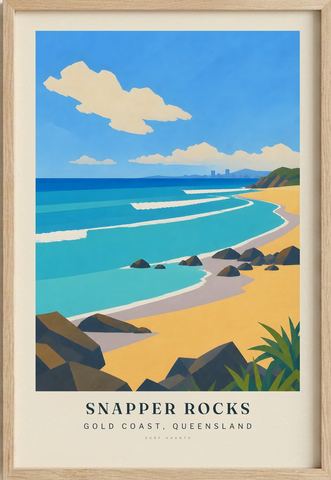
Our illustration brings the rocks, beach and curling wave into one composition. It's an interpretation of the spot rather than a record of a particular day's sandbanks. You can see the Snapper Rocks print in the collection.
Compiled from public historical sources and fact-checked against them at the time of writing – not a first-hand or local account. Corrections and memories are welcome; we verify before publishing anything sent in.