Steamer Lane: the surf, the lighthouse and the museum
Compiled by Surf Haunts · Updated 2026-10-06
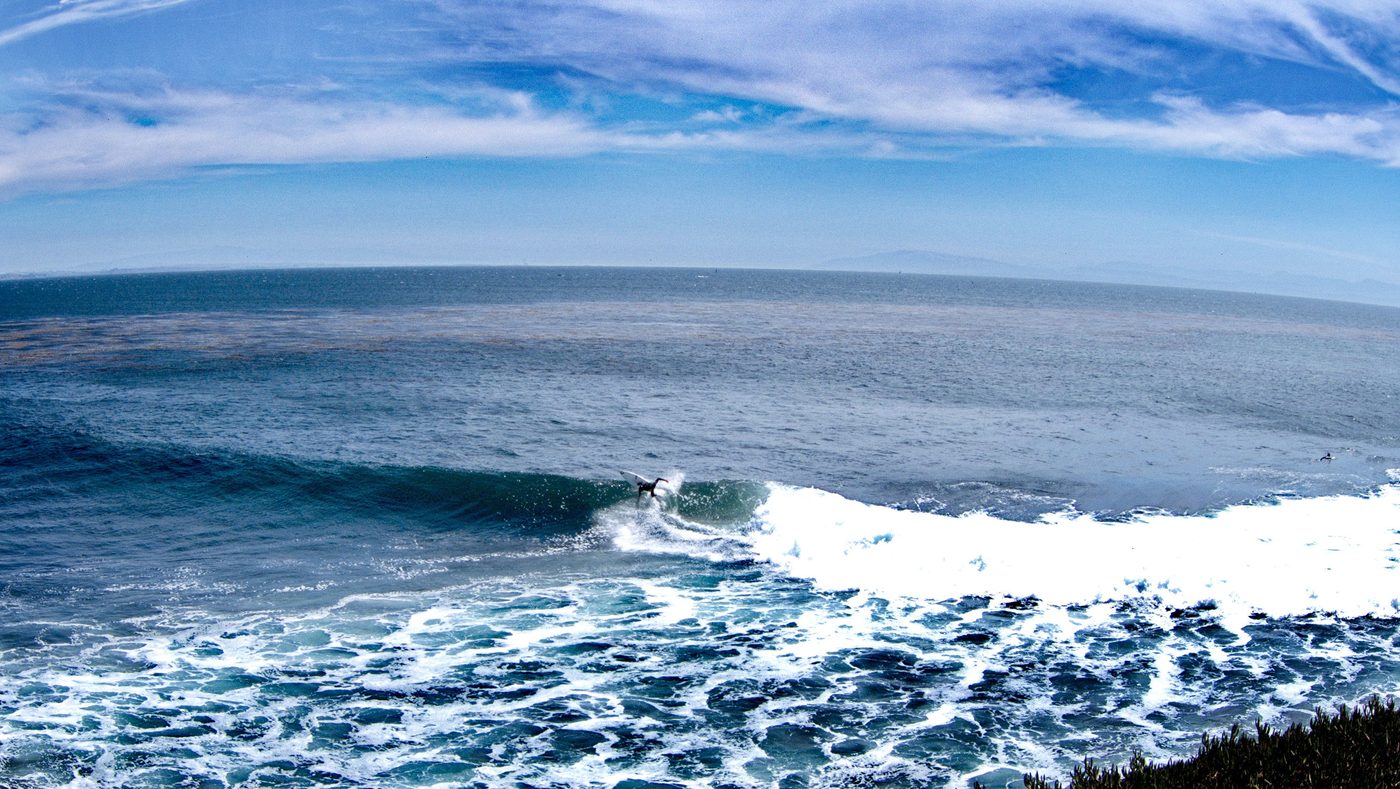
Steamer Lane is a surf spot below Lighthouse Point in Santa Cruz, California. The brick building above the waves is the Mark Abbott Memorial Lighthouse, which houses the Santa Cruz Surfing Museum. The break, the lighthouse and the museum each have a different part in the town's surfing history.
What is the lighthouse at Steamer Lane?
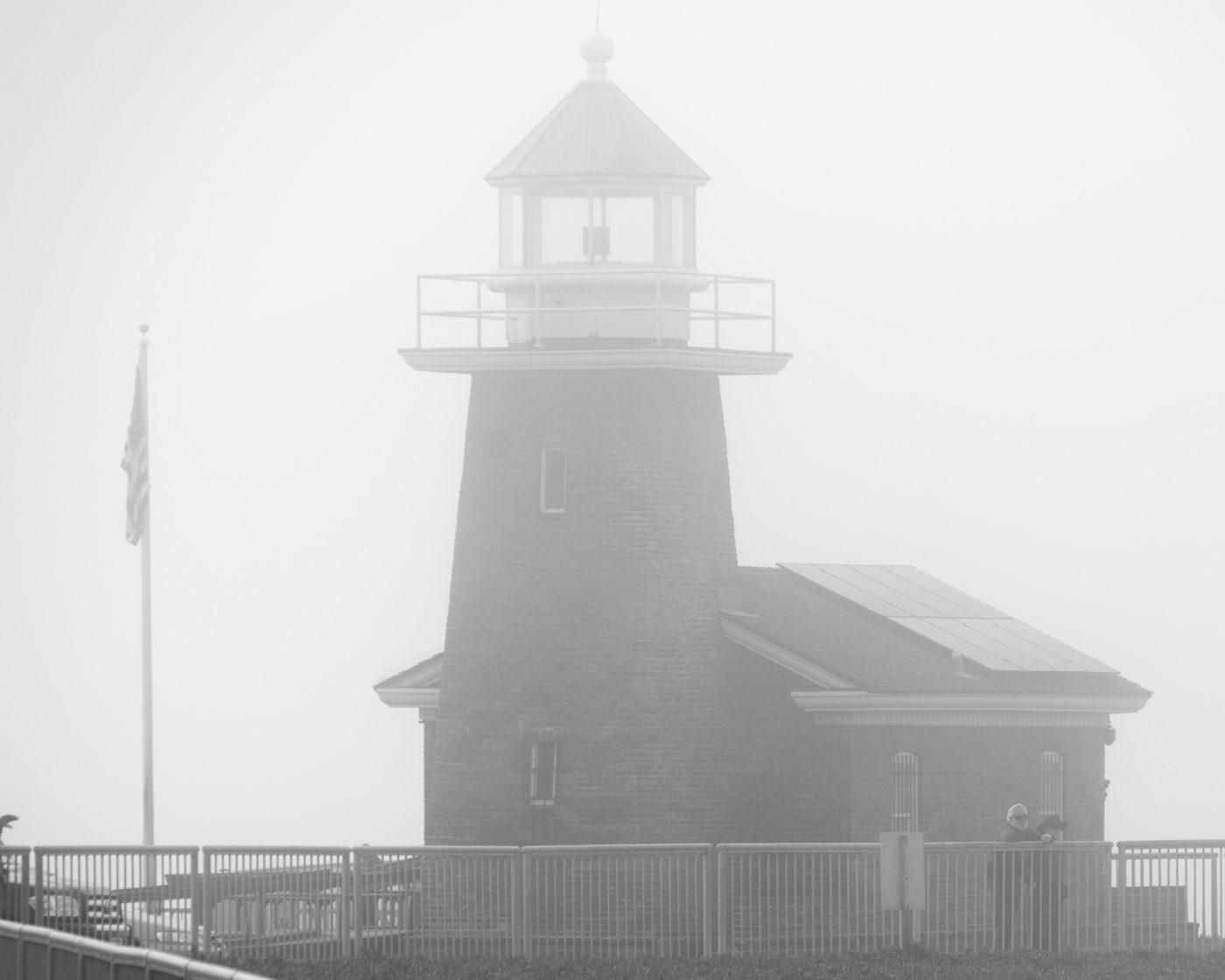
The names can get a little tangled. Steamer Lane is the surf spot; Lighthouse Point is the headland above it. The building is the Mark Abbott Memorial Lighthouse, home to the Santa Cruz Surfing Museum.
That helps explain the view in so many photographs: surfers in the water, people watching from the cliff, and a lighthouse just behind them. The building and the break are close neighbours, but they have different stories.
Why the lighthouse is a memorial
The name on the building belongs to Mark Abbott, a surfer who died in 1965. His parents built the brick lighthouse in his memory, according to the Coast Guard's history of Santa Cruz Light.
It stands near the site of an older lighthouse, which was demolished in 1948. So the brick building in our print isn't the original nineteenth-century light, even though the location has a much longer lighthouse history.
The museum came later. The city's account of its founding in 1986 credits local organisers and the Abbott family, who agreed to house it in the lighthouse. Its collection includes surfboards, photographs and other pieces of local surfing history.
The princes surfed elsewhere in town
One of those stories goes back to the summer of 1885. Three Hawaiian princes – David Kawānanakoa, Jonah Kūhiō Kalanianaʻole and Edward Keliʻiahonui – visited Santa Cruz during a break from school in San Mateo.
They made boards from local redwood and surfed at the mouth of the San Lorenzo River. The Museum of Art & History's account of their visit places the surfing there, rather than at Steamer Lane. It's a Santa Cruz story, but the distinction matters.
There is something particularly good about the boards surviving the story. The princes took them back to Hawaiʻi, and two original boards returned on loan for the museum's 2015 Princes of Surf exhibition. Visitors could see the actual redwood boards, not just a picture or a modern reconstruction.
For a different lighthouse setting, take a look at Montauk Point and its place in a surf town's history.
What do you remember?
Have you watched the surf from the point, or found something in the museum that stayed with you? We'd like to hear the small details: a photograph you recognised, a board you remember riding, or how the place looked on your first visit.
If you have a memory, a correction or a useful source, email us. We'll ask before publishing your contribution and agree with you how to credit it.
Our Steamer Lane print
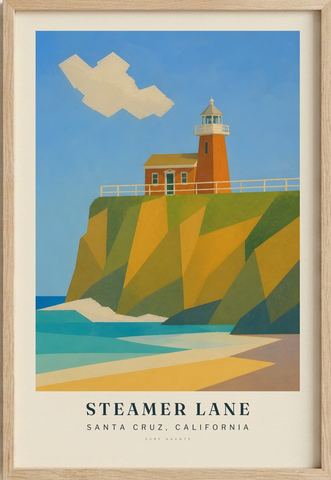
Our illustration puts the brick lighthouse above an angular ochre cliff, with turquoise water and cream foam below. It's an interpretation of the place, rather than a record of a particular day's surf. You can see the Steamer Lane print in the collection.
Compiled from public historical sources and fact-checked against them at the time of writing – not a first-hand or local account. Corrections and memories are welcome; we verify before publishing anything sent in.